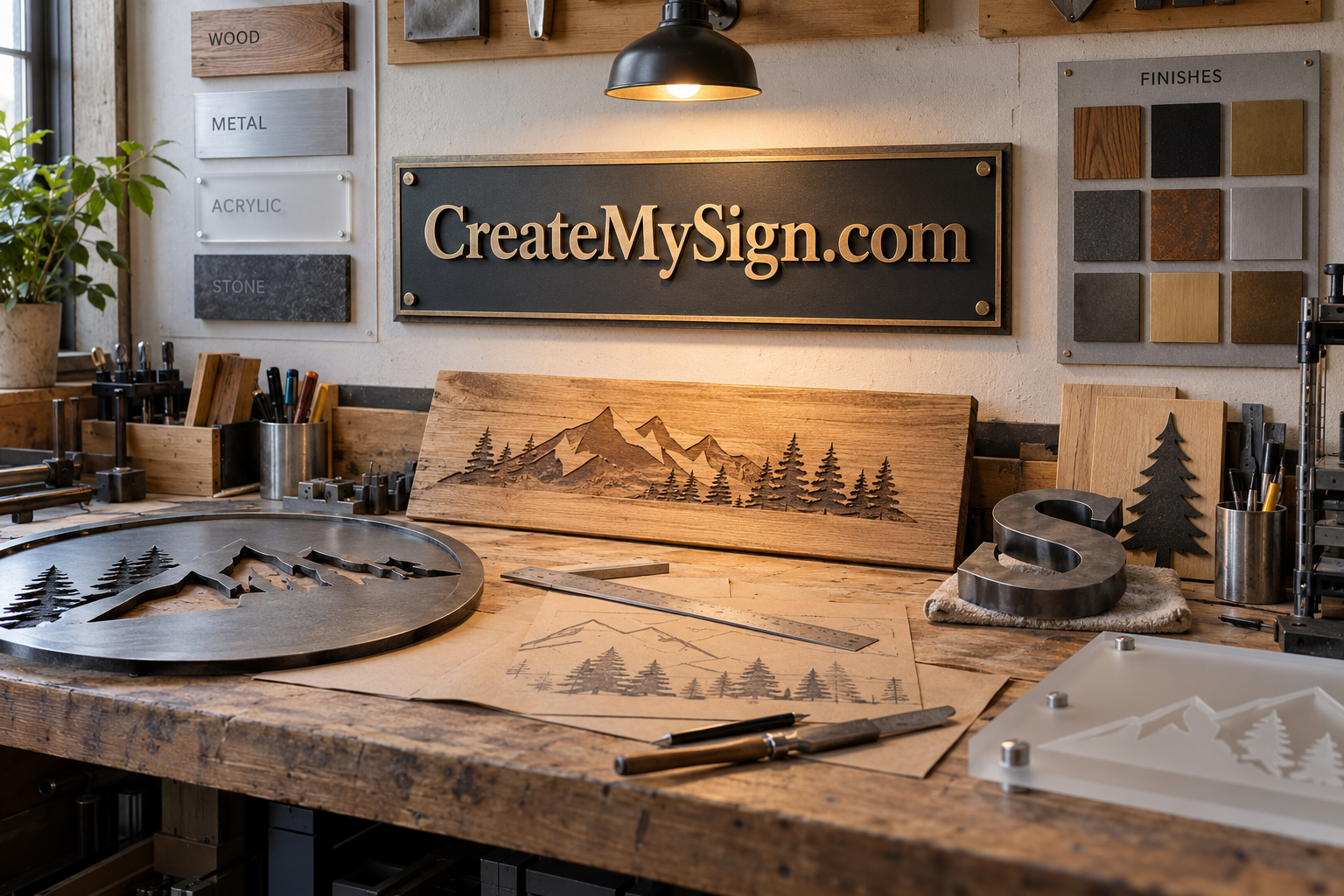
A customer has a wall, a logo, and an opening date. A custom sign studio turns those loose parts into a finished object. CreateMySign.com fits that moment well: it sounds like the action the customer came to take, while leaving the studio free to choose its materials and methods.
This is an illustrative business concept. The opportunity is a focused, made-to-order shop with a clear starting offer, supported by photographs, useful project questions, and reliable production. A new owner could build it around local installation or signs that can be packed and shipped. Those choices deserve attention before the product list grows.
Start with a job the shop can repeat
A small studio could begin with reception signs and non-illuminated storefront panels. Both invite customization, but a limited set of construction methods would make quoting more manageable. Offer a few sizes, two or three finish families, and clearly described mounting options. The customer still gets a sign made for their business; the workshop gets a process it can understand and improve.
The first customer might be an independent retailer moving into a new unit. That owner needs help deciding what belongs above the door and what belongs inside. A useful opening package could include a site review, one developed design direction, a physical finish sample, and a written specification. Price and availability would belong to the future operator’s offer, based on actual costs and capacity.
Choose local installation or a shipping model
Local work allows the studio to measure, inspect the wall, and coordinate fitting. It also ties delivery to travel time, access arrangements, and the availability of an installer. The service area should reflect those limits. A shop that can reliably cover a manageable region has a better starting proposition than one that promises installation everywhere and solves the logistics later.
A shipping model needs a different product. Consider a modest interior panel supplied with a full-size positioning template and a documented mounting system. Before selling it, test the packaging and have someone unfamiliar with the product follow the instructions. A beautiful panel that arrives damaged, or a template that leaves the buyer guessing, creates work for both sides.
Some studios may eventually support both approaches. Separate the paths on the website: “Installed locally” and “Delivered to your door” answer a useful customer question immediately. Keep product eligibility visible so a visitor does not complete a long inquiry for a sign the shop cannot supply.
Let the quote form do practical work
The domain suggests a personal project, so the intake should invite useful detail. Ask where the sign will go, its approximate dimensions, the required date, and whether installation is needed. Provide an easy way to say “not sure.” People commissioning their first sign may not know the name of a material or the difference between a panel and individual letters.
After that first exchange, request artwork and site photographs through an appropriate project channel. Ask for a wide view of the wall, a closer view of the surface, and a shot showing the approach. The International Sign Association’s explanation of sign effectiveness treats placement, typography, lighting, and material as connected decisions. An isolated logo file cannot answer all of them.
A sample project, from request to handover
Imagine a neighborhood bakery that needs an interior logo behind the counter. The owner supplies a photograph and estimates the available width. The studio first confirms that the lettering can be read from the entrance, then develops a layout using the actual wall dimensions. A small material sample helps the owner judge the finish alongside the counter and lighting.
The approved drawing records letter size, spacing, finish, and placement. The production team works from that drawing rather than a chain of informal messages. At handover, the bakery receives care instructions and a copy of the final specification. If a letter is damaged later, there is a record to work from. This ordinary paperwork is part of a good customer experience.
Find customers through adjacent trades
Interior designers, commercial fit-out teams, and local brand designers can be useful referral relationships. They often encounter the signage question before the business owner starts searching for a fabricator. A compact sample kit and an honest description of the shop’s capabilities can help a designer decide when to involve the studio.
A project gallery should explain the problem as well as show the object. Include the intended viewing position, the chosen finish, and the installation context when permission allows. Do not fill a new gallery with fictional customer stories. Start with clearly identified samples, then add completed work as it becomes available. The article on briefing a custom sign offers a useful structure for collecting those details.
Keep the promise within reach
The operational questions are concrete. Who checks the artwork? Who approves the mounting method? Which jobs require outside fabrication? What happens when a delivery date changes? Resolve those responsibilities before expanding into illuminated signs, complex structures, or work far outside the service area. A broad name can accommodate growth without requiring a broad launch.
To evaluate this direction, write down five jobs the studio could complete well with its present equipment and partners. Then choose the one that is easiest for a customer to understand and for the shop to repeat. An inquiry about acquiring CreateMySign.com can include that first offer, the intended service area, and whether the plan centers on fabrication, design, or installation. Those details make the proposed use much clearer than a long product wishlist.