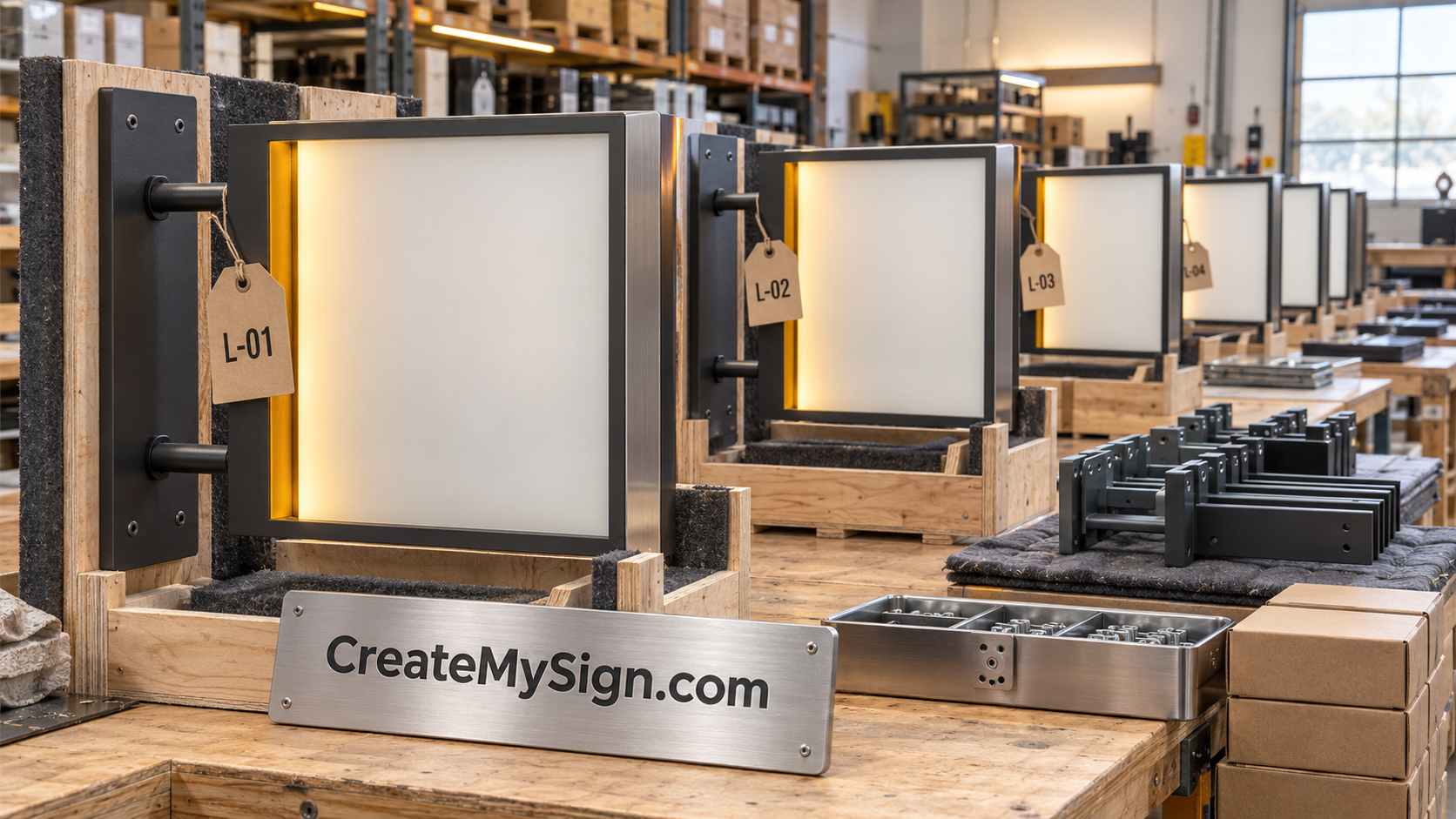
One storefront can be managed through a conversation. A group of storefronts needs a system for keeping the same brand recognizable in different buildings. CreateMySign.com could become a dedicated destination for a retailer’s sign program or a vendor-led service that coordinates repeat signage across locations.
This is an illustrative program concept, with no existing location network implied. The buyer is an operations, property, or brand team that wants store managers to request the right sign and suppliers to work from the same information. The name fits the local manager’s task while a central team controls the standards behind it.
Start with repeat requests, not the largest rollout
The first offer could cover replacement hours panels, interior category signs, or a defined set of window graphics. These requests are easier to standardize than a complete exterior identity change. A small approved catalog can show the format, intended location, information needed, and person responsible for approval.
Keep the catalog narrow enough that each item has a known production route. A store manager should not have to choose an unfamiliar substrate from a long list. Ask for the location, the approved sign type, and the variable information instead. The central team can handle the technical decisions once, then maintain them as part of the program.
Distinguish standards from site conditions
A brand standard might define typography, colors, and layout. The building still determines what can fit and how it can be installed. A sign that works above one entrance may need a different arrangement at a corner unit or a shop with a shallow fascia. Treat those variations as documented exceptions rather than letting each supplier improvise a new identity.
Create a site record with photographs, dimensions, existing signs, and access notes. Identify who verifies those measurements. A manager’s estimate can help start a request, but the final production dimensions should have a named source. The International Sign Association’s discussion of placement and design is a useful reminder that the surrounding environment affects the result.
Give every request an accountable path
A simple request sequence can be enough at first: store submits, central team checks, supplier quotes, authorized person approves, and installation is scheduled. Record the person responsible at each stage. A request should not move forward because several recipients assume someone else has approved the wording or cost.
The system also needs a way to reject or revise a request without losing its history. If a store asks for an outdated promotion, the reviewer should be able to explain the correction and attach the current artwork. A stable request identifier helps connect the discussion, quote, proof, and final photograph.
Use a pilot to expose the exceptions
Consider a retailer planning to replace opening-hours signs at twelve shops. A sensible pilot might involve one straightforward location and one with a difficult entrance. The team checks the wording, the surface, the application method, and how the finished sign is photographed. That small trial can reveal issues before materials are prepared for the remaining stores.
Suppose the second shop has a textured surface where the planned application does not suit the site. The team can select an approved alternative and add it to the program notes. Future requests then include the question that would have identified the problem earlier. The value of the pilot is the information it returns, not merely that two signs were completed.
Coordinate vendors through a usable package
A regional supplier needs more than a brand logo. Provide current artwork, a revision date, a material specification, a location schedule, and the approval contact. State what evidence is expected at completion. Clear photographs and a record of any substitutions make later maintenance easier to manage.
Different vendors may have different equipment and supported materials. Ask them to identify substitutions before quoting rather than discovering them after production. For a program with illuminated or structural signs, the responsible specialists should confirm the installation and local requirements. Avoid turning a general catalog into a substitute for a site-specific assessment.
Make maintenance part of the program
Signs have a life after installation. A damaged panel, changed opening time, or altered store layout can generate another request within the same system. Keep final dimensions and artwork versions accessible. If a sign is replaced, mark the old version as retired so it does not accidentally become the basis of the next order.
A periodic review can focus on obvious changes: inconsistent store names, unreadable information, damage, or signs left behind after a promotion. The storefront sign checklist provides a starting structure. Store staff can record observations safely from ground level and refer technical concerns to the appropriate contractor.
Introduce the program through an existing relationship
A vendor-led version could begin with a retailer already buying several kinds of signs from different suppliers. The pitch would be a better organized request and approval service, supported by a limited catalog. Demonstrate one recurring task from request to completion, including the exception path. That is a more useful conversation than a promise to handle every location immediately.
An internal version could be introduced through the retailer’s operations team. Explain which requests belong in the program and which still require a project manager. Keep the local manager’s instructions short, with examples of the photographs and measurements needed. Adoption depends on the system saving effort during a real working day.
Bring scale and timing to the inquiry
To evaluate CreateMySign.com for this use, identify the approximate location count, first sign family, and target rollout period. Decide whether the name would face customers, suppliers, or store teams. Those audiences will shape both the presentation and the level of access required. An acquisition or partnership inquiry can include that outline and the role the proposed operator would take in coordinating the program.